
More Than a Mission Trip
October 6, 2026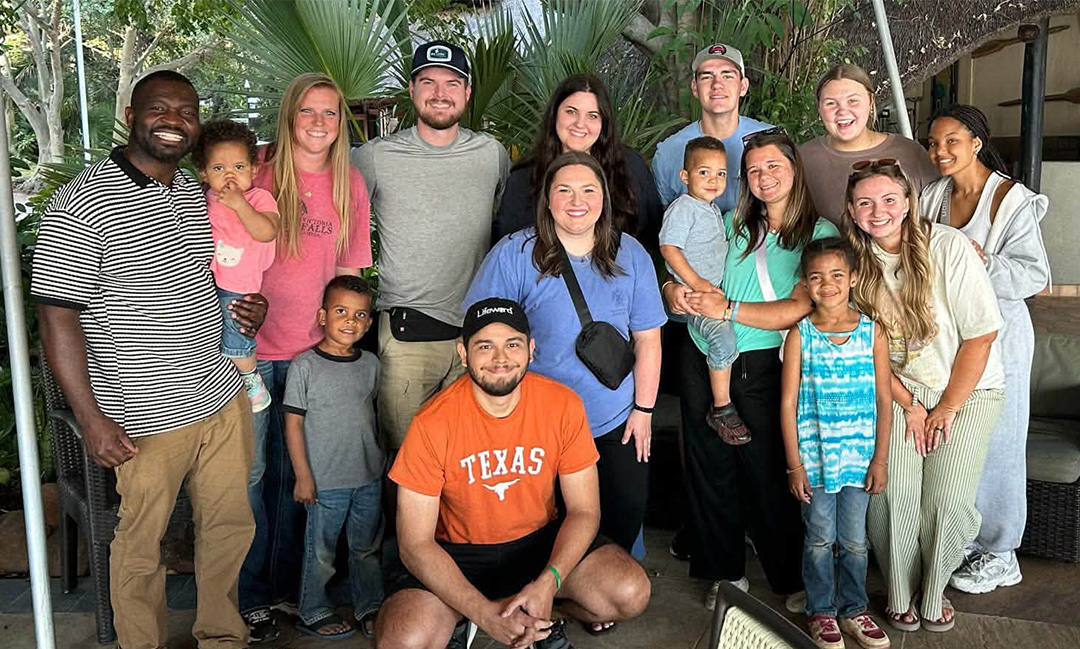
How short-term teams strengthen missionaries, churches, and ministries long after they leave
When a short-term mission team arrives, it can be easy to measure its impact by what happens during the week: How many children attended? How many projects were completed? How many people heard the gospel?
But from the perspective of missionaries receiving a team, some of its greatest impact is harder to count.
BMA Global missionaries Joshua and Meagan Phiri serve with their four children–Ashlyn, Zekani, Jaron, and Kenzi–in a village near Livingstone, Zambia. Their ministry takes them into remote communities through church planting, discipleship, leadership training, children’s ministry, clean-water projects, and practical care for families.
For the Phiris, there really is no typical week. Joshua may spend one day discipling men, another visiting a village church, and another responding to a family in crisis. Meagan cares for their children and home, homeschools Ashlyn and Zekani, and serves alongside Joshua whenever possible.
“Here, ministry and family life are not separate,” Meagan said. “Often, ministry simply walks through our front door.”
This year, the Phiris welcomed their first Volunteer Student Missions (VSM) team.
Meagan was both excited and nervous. Young people bring energy, creativity, and enthusiasm, but hosting a team also involves transportation, meals, schedules, ministry preparation, and countless details behind the scenes. The Phiris weren’t sure how the team would adjust to village life, cultural differences, changing plans, and communication challenges.
From the beginning, however, Meagan said the team demonstrated that they had come not only to serve but also to listen, learn, and love people well.
Multiplying Their Hands
One of the greatest gifts the team gave the Phiris was additional capacity.
During a normal week, Meagan constantly moves between caring for her children, managing their home, helping with ministry, and responding to practical needs. At times, those responsibilities mean choosing between participating in a ministry activity and taking care of everything happening around it.
Having a team changed that.
During Vacation Bible School, team members led Bible lessons, crafts, songs, and games. With additional capable and loving hands available, Meagan was able to participate more fully, encourage the children, and support local helpers.
Joshua and Meagan could have taught a lesson or organized a gathering themselves. What they could not have done alone was give so many children the same level of individual attention.
“The team multiplied our hands and our capacity,” Meagan said. “Their greatest accomplishment was not simply completing a program; it was making room for children to be welcomed, encouraged, and loved.”
The children heard Bible lessons, created crafts, sang songs, played games, and learned about God’s love and His creation. But Meagan believes an even deeper impact was that people felt seen.
“In a neglected village, being remembered matters,” she said.
The team’s presence communicated something important to the children and their families: They were valuable. They had not been forgotten.
And because the team served alongside ministry already taking place, the relationships they helped strengthen did not end when they boarded a plane.
Strengthening the Church That Remains
Healthy short-term missions are not intended to replace long-term missionaries or local churches. Instead, teams have an opportunity to step into work already underway and strengthen it.
The VSM team brought fresh energy and encouragement to Delevu Baptist Church and Mutaba Baptist Church in Malongalonga. Believers from different countries, languages, and backgrounds worked side by side for a common purpose.
“The team did not replace the local church,” Meagan said. “They strengthened its witness and gave it new momentum for reaching families in the community.”
Their presence helped the Phiris and local churches reach more children, open new conversations, deepen community trust, and spend meaningful time with individuals. The missionaries and local believers can now continue nurturing those relationships.
That’s why Meagan believes healthy short-term teams can strengthen and accelerate long-term ministry.
“A short-term team may only be present for a few days, but those days become connected to years of prayer, trust, discipleship, and follow-up,” she said.
The impact can also travel home with team members. After sitting with children, worshiping with churches, walking through villages, and serving alongside missionaries, participants know more than ministry statistics. They know the people behind them.
That experience can turn short-term participants into informed prayer partners and advocates for long-term ministry.
Ministering to the Missionary Family
The VSM team’s impact wasn’t limited to ministry activities or community relationships. They also encouraged the Phiri family personally.
Meagan understands firsthand that missionary wives and mothers often carry both visible ministry and responsibilities that few others see. Children need care. Meals must be prepared. Schedules have to be managed. Emotional needs require attention…all while a missionary wife may also desire to participate fully in ministry.
The team’s presence gave Meagan additional freedom to serve, but it also gave the entire family something they needed: encouragement.
The Phiri children especially enjoyed having young adults around who were ready to run, play, and be silly with them. Meagan appreciated spending time with other Americans and enjoying familiar humor and conversation. For Joshua, having people step into the ministry and share the work was deeply encouraging.
“The team brought more than helping hands,” Meagan said. “They brought friendship, renewed energy, and a beautiful reminder that our family is not serving alone.”
For Meagan, that distinction matters.
“Their presence didn’t just help us accomplish ministry,” she said. “Their presence ministered to our family.”
When Joy Needs No Translation
One image from the week remains particularly vivid for Meagan.
She watched as the distance between the American team and the village children gradually disappeared.
At first, they came from different countries, cultures, and languages. Before long, they were singing together, laughing, making crafts, and running across the ground during games.
“There was dust in the air, songs rising from the children, and laughter everywhere,” Meagan recalled. “Joy did not need translation.”
To her, the scene offered a glimpse of God’s kingdom…People from different nations gathered around the truth that they were created and loved by God.
It’s also a reminder that making a difference through short-term missions doesn’t require extraordinary talents.
“You need a willing heart, humility, flexibility, and a readiness to love the person standing in front of you,” Meagan said.
A child may remember the person who sat beside them and helped with a craft. A missionary family may remember the people who helped carry the weight. A village church may remember that believers from another part of the world came to stand beside them.
When short-term teams come humbly and serve under the leadership of missionaries and local believers, their week doesn’t have to become an isolated ministry experience. Instead, it can add strength to something already rooted and growing.
Their presence sends a message to missionaries, local churches, and communities that can sometimes feel forgotten:
You are not alone. The wider family of God has not forgotten you.
The team may stay for only a week.
But the ministry continues long after the suitcases go home.