
The Dirt Story
March 24, 2026
Walking with Pastors in Bolivia
April 7, 2026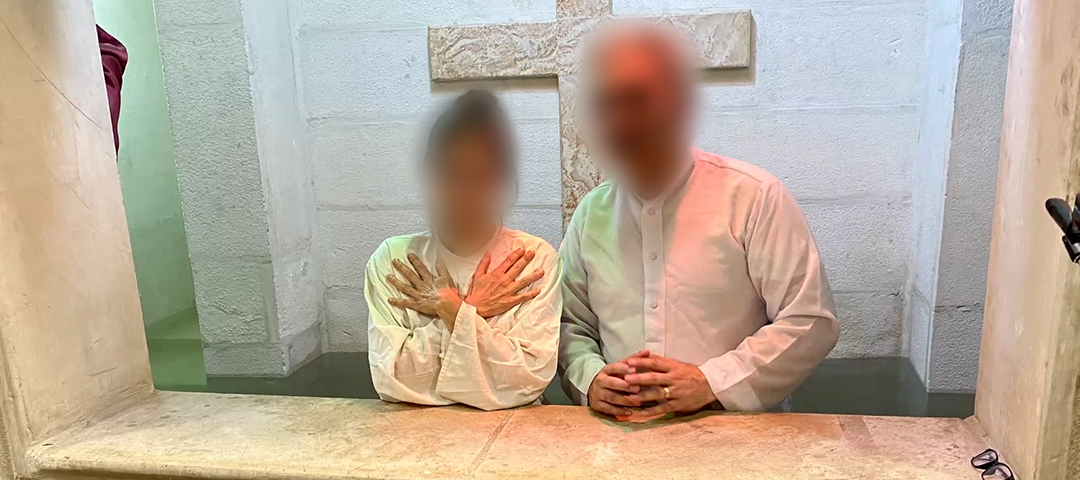
By John Meriweather
For many Christians around the world, baptism is a public celebration. Family fills the pews, cameras flash, and applause echoes across the sanctuary. But in other parts of the world, following Jesus comes at a cost far greater than discomfort or reputation. Sometimes, it requires secrecy and courage.
I witnessed this reality up close during a visit to the Middle East. It was my first visit to the region, and on our final night we attended a church service celebrating the baptism of fifteen new believers. People lined up to testify, and it was one of the most powerful services I’ve ever experienced.
But what happened next left the deepest impression.
Before the service began, a few visitors were quietly asked to remain after the final baptism, after the congregation had left. When the time came, the sanctuary emptied, the doors were locked, and the lights switched off. Then suddenly, the baptistry lights came on.
Standing there was the pastor and a woman dressed in a baptismal robe. The pastor introduced her by a simple name: Esther.
Esther, her husband, and their three teenage sons were devout in their non-Christian religion. Her first contact with the church came through a community medical clinic: free care offered with no strings attached, simply out of love.
That kindness sparked curiosity. Why would anyone do this for free?
In Esther’s country, it is illegal to proselytize. But when someone asks of their own accord, Christians are permitted to answer. Esther kept asking. She kept listening. In time, she embraced the gospel for herself.
But unlike the fifteen baptized earlier that evening, Esther understood the risk of making her faith public. If her husband or sons discovered her conversion, she expected to be rejected and possibly removed from her home and family.
So, on that quiet night in a darkened sanctuary, she stepped into the water with only a handful of witnesses. Her prayer was simple: that through her obedience, her family would one day see Christ in her, and that God would make a way for the gospel to reach them too.
Stories like Esther’s are a reminder that the message of Christ is not bound by geography, culture, or risk. Around the world, men and women are exchanging fear for faith, tradition for truth, and isolation for hope. For them, the gospel is not merely an idea; it is a transforming reality.
Not everyone will witness a baptism like Esther’s. Not everyone will travel overseas or learn another language. But through prayer, giving, and support, every church can help ensure the gospel continues to reach “the next Esther”–wherever she may be.